
Mahindra XEV 9S vs XEV 9e: Real-World Range Comparison Unveiled
A Detailed City and Highway Range Test of Mahindra XEV 9S and XEV 9e in Indian Conditions
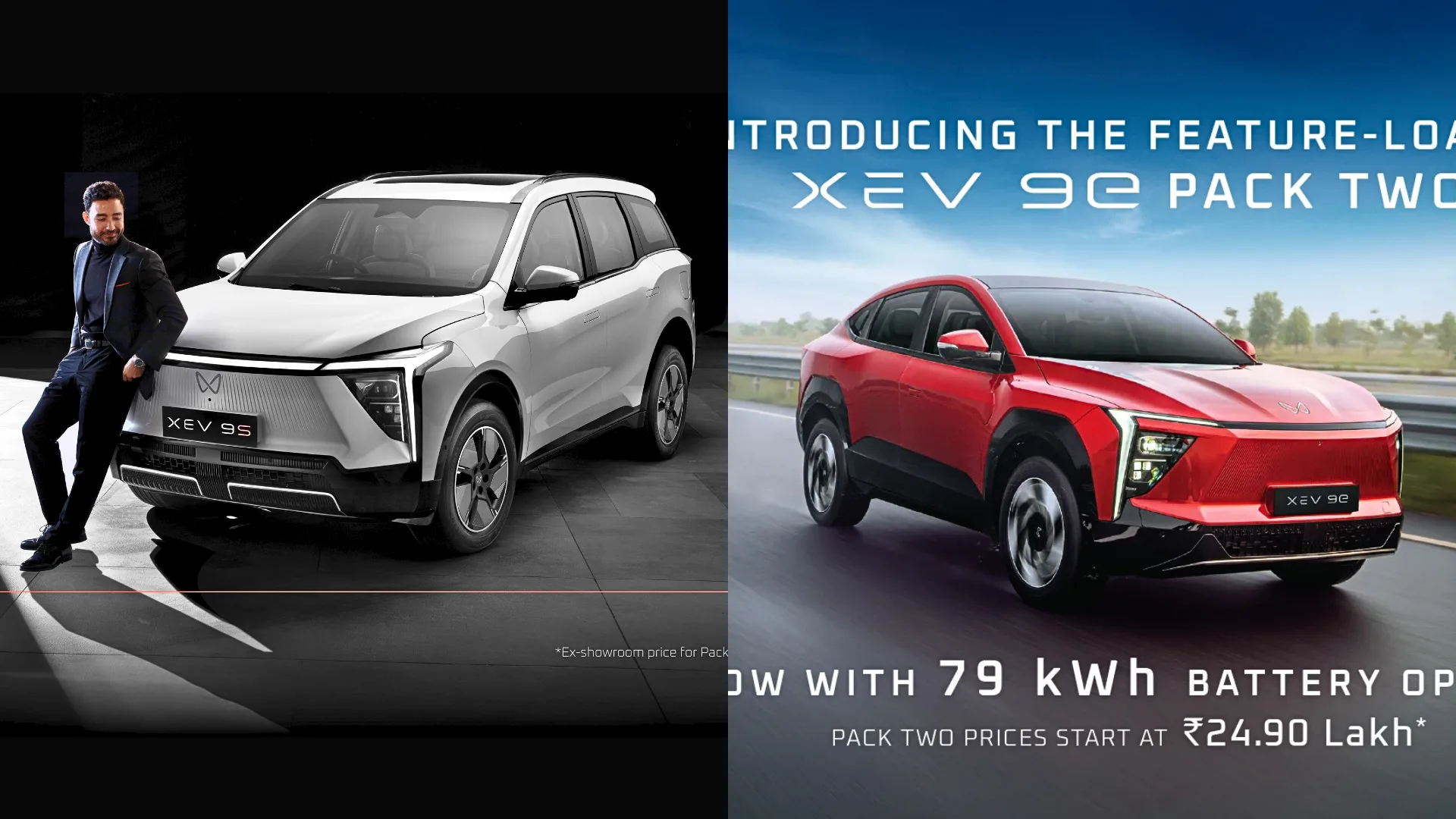
In the rapidly evolving electric vehicle (EV) market, Mahindra has made significant strides with its flagship models, the XEV 9S and XEV 9e. Both vehicles are built on the innovative INGLO born-electric car platform and share similar battery options and motor configurations. This article delves into a comprehensive real-world range comparison between these two Mahindra eSUVs, providing insights for potential buyers in India.
Key Specifications
Mahindra XEV 9S Pack Three Above
- Battery Size: 79 kWh
- Electric Motor Setup: Single motor, rear
- Power: 286 hp
- Torque: 380 Nm
- Kerb Weight: Not Available
- MIDC Range: 679 km
- Claimed 0-100 kph Time: 6.8 seconds
- Price: ₹29.45 lakh
Mahindra XEV 9e Pack Three
- Battery Size: 79 kWh
- Electric Motor Setup: Single motor, rear
- Power: 286 hp
- Torque: 380 Nm
- Kerb Weight: 2,201 kg
- MIDC Range: 656 km
- Claimed 0-100 kph Time: 6.8 seconds
- Price: ₹30.50 lakh
Weight and Performance Insights
The XEV 9S is confirmed to be heavier than the XEV 9e coupe, although Mahindra has not disclosed the exact weight difference. Interestingly, the XEV 9S boasts a higher ARAI range by 23 km, likely attributed to an over-the-air (OTA) software update that enhances battery management. This update has also been applied to the XEV 9e, but the latter has not undergone a recent MIDC test, resulting in its ARAI range being listed at 656 km.
Real-World Range Test Results
In our exhaustive real-world range tests, we evaluated both models under controlled conditions to ascertain their performance in city and highway scenarios. The results are as follows:
- XEV 9S Pack Three Above:
- City Range: 478 km
- Highway Range: 477 km
- Overall Range: 477.5 km
- Battery Efficiency: 6.04 km/kWh
- XEV 9e Pack Three:
- City Range: 488 km
- Highway Range: 425 km
- Overall Range: 456 km
- Battery Efficiency: 5.77 km/kWh
Performance Analysis
The XEV 9e performed exceptionally well during highway runs, achieving a tested range of 488 km, which is 10 km more than the XEV 9S. However, in city driving conditions, the XEV 9e fell short by 52 km compared to the XEV 9S. Overall, the XEV 9S demonstrated a superior range of approximately 20 km on a single charge of the 79 kWh battery.
It is important to note that the XEV 9S was tested in winter conditions, while the XEV 9e’s tests were conducted in June, where higher ambient temperatures (up to 40°C) could have adversely affected battery efficiency.
Testing Methodology
For our range tests, both vehicles were fully charged, and tire pressures were maintained as per manufacturer recommendations. The cars were driven in a fixed loop that included both city and highway segments, with average speeds kept consistent. Climate control was set to 22°C, and other electrical systems were used as they would be in everyday driving. This rigorous testing approach ensures that our data provides a reliable indication of real-world performance.
Conclusion
In summary, the Mahindra XEV 9S and XEV 9e offer compelling options for Indian consumers looking to transition to electric mobility. While the XEV 9e excels in highway performance, the XEV 9S stands out in city driving and overall range. As the EV market continues to grow, these models showcase Mahindra’s commitment to delivering efficient and practical electric vehicles for the Indian audience.
About the Author